
BreAkIng Bad – Hacking the AI Act
- Type of event: Modularized project seminar
- Facilities: Faculty of Mathematics, Informatics & Natural Sciences
- Funding period: 01.09.2024 to 31.03.2025
- Short title: BreAkIng Bad
Orientation of the project

Artificial intelligence is fundamentally changing how decisions are made, processes are controlled, and information is processed. And not only that. It is also changing how we understand ourselves and our relationships with others, what values are important to us, and how we define them. Its widespread use offers enormous opportunities, but also poses significant challenges—especially when AI systems are used without careful consideration or without a clear regulatory framework.
A key problem is that technological innovation often advances faster than society and the legal system can keep up with its consequences. Future specialists and managers in particular must therefore learn early on not only to work with AI-supported systems, but also to critically evaluate their potential and risks. Against this backdrop, the idea for the seminar “BreAkIng Bad: Hacking the AI Act” was born. The aim was to give students a practical understanding of AI regulation in an interactive format by examining the European Union's AI Act. This represents a relevant and controversially discussed regulatory framework that highlights how technological innovation, philosophical and ethical aspects, and legal control influence each other.
As part of the follow-up, the content developed in the project seminar was modularized and integrated into existing courses.

deepmind x / unsplash
Review and results

A key success factor was the involvement of experts from various disciplines such as consulting, ethics, and law. This promoted interdisciplinary discourse and demonstrated that AI regulation is not purely a technical or legal issue, but requires a holistic approach. This allowed students to learn about different perspectives and critically question their own points of view. The project seminar format, in which students had to advise fictional but realistic clients, created a practice-oriented learning environment. This not only promoted a deep understanding of the content, but also important key competencies such as critical thinking, analytical skills, and teamwork. The use of case studies and interactive discussions made the complex topic more tangible.
A key outcome of the project is that it has raised students' awareness of their future responsibilities in dealing with artificial intelligence. They have not only gained technical and regulatory knowledge, but also an awareness of the ethical implications. This is particularly relevant as many of them will later work in positions where they will make decisions about the use of AI or perhaps even help shape the relevant regulations.
A central goal of the second phase was to prepare the developed materials in such a way that they could also be used by other teachers. In addition, contacts were established with other teachers. Through the targeted preparation and dissemination of the materials, the project was able to have an impact beyond the original seminar group. Teachers who were interested in the topic received support in integrating the content into their own courses. This helps to further anchor awareness of AI regulation in university teaching and, in the long term, to bring more students into contact with the topic.
Tips from lecturers for lecturers

In the first phase of the project, a strong transfer of knowledge and expertise was achieved by the project members with teaching experience. There was also a particular focus on the targeted involvement of external experts. This enabled the establishment of an interdisciplinary network to shed light on the areas of conflict in the use of (generative) AI. In addition, the ability to coordinate interdisciplinary and practice-oriented projects – i.e., projects that go beyond one's own field of expertise – was also expanded. Given the importance of this topic for society as a whole, this gain in competence is considered extremely relevant. In the second part of the project, the skills for concisely preparing teaching materials (modularization of the developed teaching content) for different target groups were sharpened and the ability to present the content was further expanded.
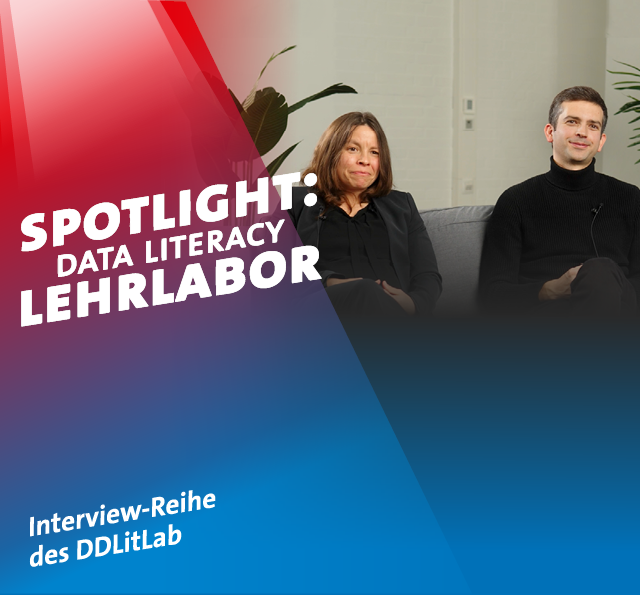
Persons involved

Lucas Memmert
Research Assistant & Project Manager
Focal points:
- Human-AI Collaboration
- Generative/Large Language Models
- Complex Problem Solving

Dr. Michaela Regneri
Senior Researcher & Project Manager
Research Group: Machine Learning
- Optimization
- Understanding Deep Learning Architectures
- Quantum Computing

Sandra Timmermann
Student Assistant (B.A. Philosophy, minor in Computer Science)
Focal points:
- Social injustice and the role of IT
- Value-sensitive design
- Neurodiversity, esp. autism
Faculty of Mathematics, Informatics & Natural Sciences
Applicants: Dr Michaela Regneri, Lucas Memmert
Collaborators: Sandra Timmermann
Funding line: Interdisciplinary Data Literacy Education
Funding period: 01.09.2024 - 31.03.2025